
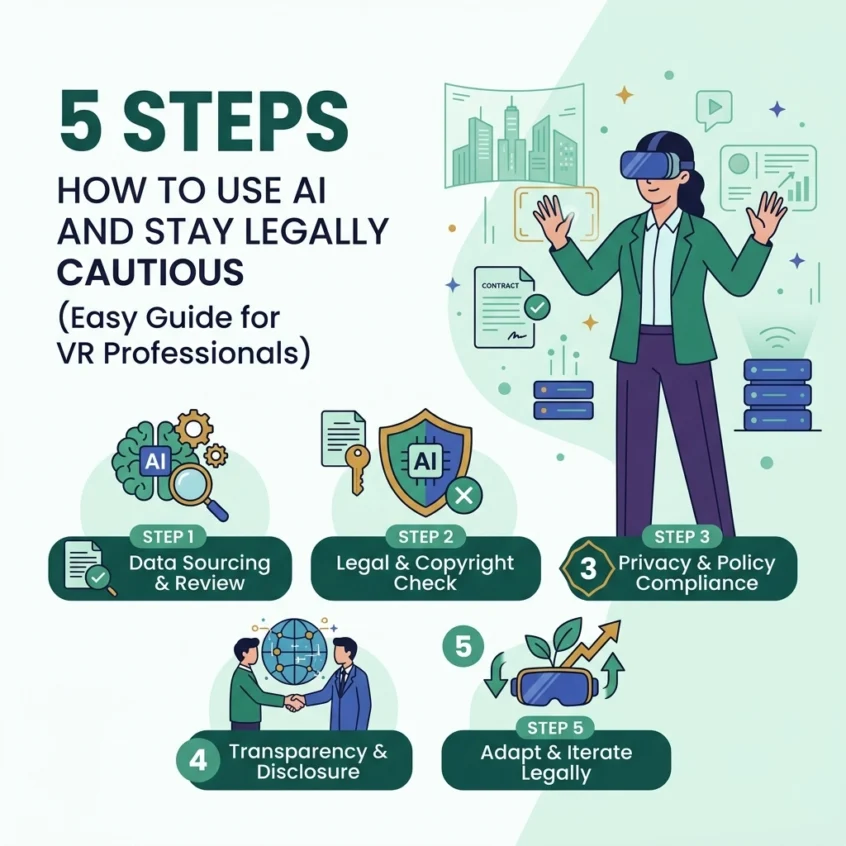
AI isn’t coming for your job; it’s coming for your paperwork. For the modern Vocational Rehabilitation (VR) professional, the promise of Generative AI is intoxicating. It can summarize hours of clinical notes in seconds, draft Transferable Skills Analyses (TSAs), and even suggest creative vocational pivots for complex cases. But in our industry, efficiency without ethics is a legal landmine.
As we transition into The Intuitive Collective™, the goal is to work smarter, not faster at the expense of our professional integrity. If you are using public AI tools to process client data without a strategy, you aren't just being innovative: you’re being reckless.
According to a 2023 KPMG survey, 37% of Canadian organizations are already using generative AI, yet many lack the formal guardrails to prevent data leaks or bias. In the VR world, where we handle sensitive medical and vocational histories, the stakes are significantly higher.
Here is how to leverage the power of AI while remaining legally defensible and ethically sound.
1. Eliminate Personal Identifiable Information (PII)
The most significant legal risk when using AI tools like ChatGPT, Claude, or Gemini is the potential for data leakage. Public AI models "learn" from the data you feed them. If you upload a client’s medical report or a detailed summary including their name and date of birth, that information enters the model’s training set.
The Fix: De-identification is Mandatory
Before any data touches an AI prompt, you must scrub it of PII. This includes:
- Names, addresses, and contact information.
- Specific dates (use "Client, 45-year-old male" instead of "John Doe, born May 1, 1981").
- Specific employer names or niche job titles that could identify the person.

Work Smarter Tip: Use a "Master Key" system. Keep a local, secure document where "Client A" correlates to "John Doe." Only ever input "Client A" into the AI tool. This ensures that even if a data breach occurs at the AI provider level, the information is useless to third parties.
2. Secure Informed Consent (The Canadian Context)
In Canada, the Personal Information Protection and Electronic Documents Act (PIPEDA) and provincial equivalents like Ontario’s PHIPA govern how we handle sensitive information. You cannot assume that your existing "Consent to Release Information" forms cover the use of AI.
The Fix: Update Your Disclosure Agreements
Transparency is the antidote to litigation. Your clients have a right to know if an algorithm is being used to help determine their vocational future.
- Be explicit: State that AI tools may be used for administrative assistance or document drafting.
- Explain the 'Why': Frame it as a tool for accuracy and efficiency, not a replacement for your clinical judgment.
- Offer an Opt-Out: Some clients may be uncomfortable with AI. Ensure they have the right to request 100% human-led processing without it affecting their service level.
Building a culture of transparency is a core tenet of The Intuitive Collective™. We don't hide the tech; we lead with it fearlessly.
3. Audit for Algorithmic Bias and "Hallucinations"
AI is a mirror of the internet: which means it is often biased, outdated, and occasionally prone to making things up (hallucinations). In VR, bias can lead to discriminatory vocational recommendations. For example, an AI trained on historical data might inadvertently suggest lower-paying roles for female-identifying clients or overlook accommodation needs for specific disabilities.
The Fix: The "Verification Loop"
Never copy-paste AI output directly into a final report. You must act as the "Human-in-the-Loop."
- Fact-check job codes: Ensure NOC (National Occupational Classification) codes are current and accurate.
- Verify physical demands: If an AI says a "Software Developer" role is "Sedentary," cross-reference that with the specific Canadian standard.
- Scrutinize for bias: Ask yourself: "Would the AI have suggested this same path if the client’s demographic data were different?"

Canadian courts and tribunals value "defensible" evidence. A report generated entirely by AI without a signature verifying human review is a liability, not a professional document.
4. Choose "Enterprise Grade" Over "Consumer Grade"
Most VR professionals start with the free versions of AI tools. From a legal standpoint, this is a mistake. Free versions typically have the least amount of data protection and the most aggressive data-sharing policies.
The Fix: Move to Paid, Secure Tiers
If you are serious about working smarter, you need the right tools. Look for providers that offer:
- SOC 2 Type II Compliance: This is a gold standard for data security.
- Data Opt-Outs: Ensure your settings are configured so that your inputs are not used to train the global model.
- Business Associate Agreements (BAA): While more common in the US (HIPAA), seeking similar data-processing agreements in Canada ensures the provider is legally bound to protect your data.
Investing in a pro-tier tool is a small price to pay for the peace of mind that your client’s private life isn't becoming part of a public data set.
5. Formalize Your AI Policy
Ambiguity is the enemy of leadership. If you manage a team of VR consultants or vocational evaluators, you need a written AI policy today. Without it, your staff will use these tools in the "shadows," creating inconsistent and potentially illegal workflows.
The Fix: Standard Operating Procedures (SOPs)
Your policy should answer three questions:
- Which tools are allowed? (e.g., "Only the company-provided ChatGPT Team account.")
- What data can be entered? (e.g., "Never enter a SIN or full name.")
- How must the output be labeled? (e.g., "All AI-assisted drafts must be reviewed and signed off by a Senior Consultant.")

By setting clear boundaries, you empower your team to lead fearlessly. You remove the fear of "getting in trouble" and replace it with a structured, high-performance framework.
The Big Picture: Efficiency is Nothing Without Credibility
The Canadian Artificial Intelligence and Data Act (AIDA) is currently being refined to ensure that AI systems are developed and used responsibly. As a VR professional, staying ahead of this curve isn't just about following the law: it’s about maintaining the "Stay Human" pillar of our work.
AI can analyze data, but it cannot empathize with a client who has just lost their career due to a catastrophic injury. It can suggest a job, but it cannot navigate the complex emotional landscape of a return-to-work meeting.
Use AI to handle the friction: the formatting, the initial research, the structure: but keep your human intuition at the center of every final decision. That is the essence of The Intuitive Collective™.
Ready to level up your strategy? I break this down further inside The Intuitive Collective™ Pro.

Summary Checklist for VR Professionals:
- De-identify everything: Strip names and specifics.
- Get signed consent: Ensure clients know AI is part of the toolkit.
- Verify outputs: Always cross-reference AI suggestions with the NOC and medical evidence.
- Upgrade your tech: Use paid tiers with better privacy controls.
- Write the rules: Create an AI SOP for your practice or agency.
By following these five steps, you don't just stay out of the courtroom; you position yourself as a forward-thinking leader in the evolving landscape of vocational rehabilitation. Work smarter. Lead fearlessly. And above all, stay human.
For more insights on high-level leadership and vocational strategy, explore our latest courses on Vocational Quest.