
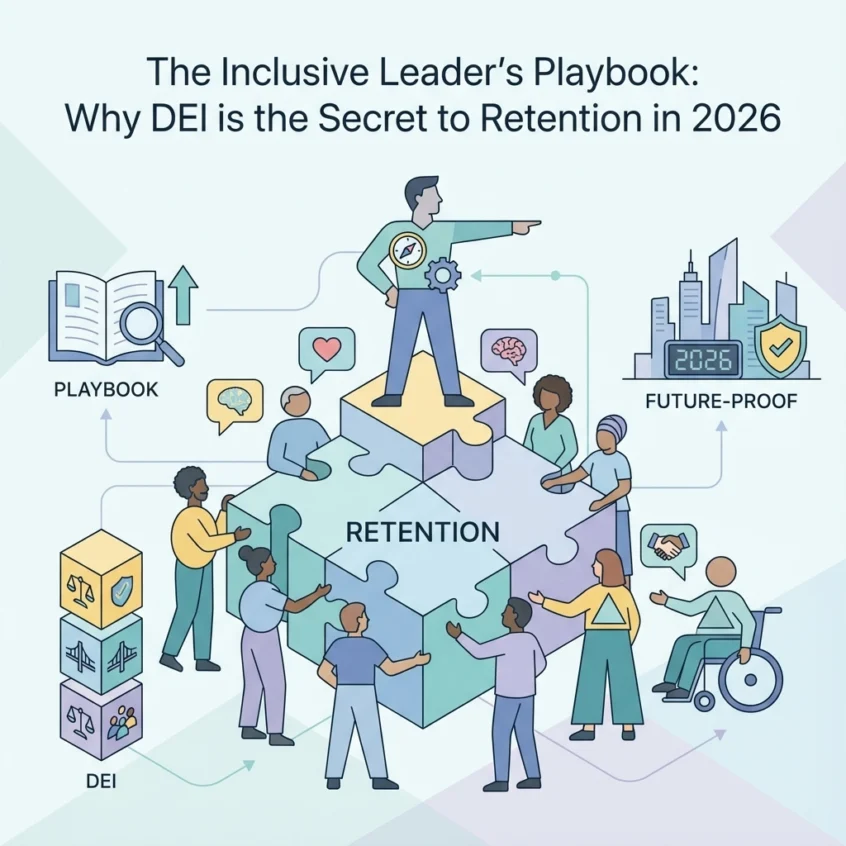
Here's the reality check nobody wants to hear: your best talent is already updating their LinkedIn profiles. And if you think competitive salaries and ping-pong tables are going to keep them around, you're playing last decade's game.
The retention crisis isn't just about money anymore: it's about belonging. By 2026, organizations that haven't cracked the code on inclusive leadership will be hemorrhaging talent faster than they can hire. But here's the thing: the companies getting retention right aren't just checking DEI boxes. They're fundamentally rewiring how leadership works.
The Great Compliance Shift Is Over
Remember when DEI meant mandatory training sessions and diversity quotas? Those days are done. The organizations winning the talent war in 2026 understand that inclusion isn't a program you implement: it's a culture you cultivate.
The shift is happening because employees, especially younger generations, can smell performative inclusion from a mile away. They want leaders who don't just talk about psychological safety: they create it. They want workplaces where their authentic selves aren't just tolerated but leveraged as competitive advantages.

This evolution demands a new breed of leader. Susan MacKenty Brady and Elisa van Dam's framework in "The Inclusive Leader's Playbook" captures this perfectly: inclusive leadership isn't a soft skill anymore: it's a business imperative that directly impacts your bottom line through retention.
Why 2026 Is the Retention Tipping Point
Three massive workforce shifts are converging to make 2026 a make-or-break year for organizational culture:
The Experience Economy: Employees increasingly view their workplace experience as a reflection of their personal brand. If your company culture doesn't align with their values, they're not just leaving: they're broadcasting why on social media.
Skill Scarcity: The talent pool for specialized roles is shrinking while demand explodes. The cost of replacing a skilled employee now averages 50-200% of their annual salary. You literally can't afford to lose people.
Generational Handoff: Gen Z is hitting mid-career stride with fundamentally different expectations about workplace inclusion. They expect leaders who can navigate cultural nuance, not just follow HR protocols.
The Inclusive Leader Framework That Actually Works
Forget the theoretical models. Inclusive leaders who retain talent master six concrete actions that transform workplace culture:
Lead with Curiosity, Not Assumptions: Instead of making decisions based on how things "usually work," inclusive leaders actively seek diverse perspectives before moving forward. This means building decision-making processes that intentionally include voices that might otherwise be overlooked.
Create Psychological Safety Through Structure: It's not enough to say "speak up": you need systems that make it safe to do so. This includes anonymous feedback channels, regular check-ins that go beyond project updates, and clear protocols for addressing concerns without retaliation.

Address Bias in Real-Time: Inclusive leaders call out bias when they see it, not in annual reviews. This requires developing the skills to have uncomfortable conversations in the moment and the courage to disrupt harmful patterns as they happen.
Amplify Underrepresented Voices: This goes beyond inviting diverse people to meetings. It means actively ensuring their ideas are heard, credited, and acted upon. It means understanding who tends to get interrupted and who gets ignored: then changing those dynamics.
Customize Recognition and Growth: Not everyone thrives with public recognition. Not everyone wants the same career path. Inclusive leaders learn how each team member prefers to be acknowledged and supported, then adapt their approach accordingly.
Build Cultural Bridge Skills: This is where many leaders stumble. It's not about being "colorblind" or treating everyone the same. It's about understanding how different cultural backgrounds shape communication styles, work preferences, and professional goals: then leveraging that diversity strategically.
The Retention Multiplier Effect
Here's what most organizations miss: inclusive leadership doesn't just prevent turnover: it creates retention multipliers. When employees feel genuinely valued for their unique contributions, they become your best recruiters. They bring their networks. They refer other high-quality candidates. They become advocates for your brand in ways that no marketing budget can buy.
The data backs this up. Companies with inclusive leadership report 67% higher retention rates and 87% better decision-making outcomes. But more importantly, they report something that's harder to quantify but impossible to ignore: their employees actually want to be there.

Where Most Leaders Get Stuck (And How to Unstick Them)
The biggest barrier to inclusive leadership isn't bad intentions: it's lack of practical skills. Most leaders know they should be more inclusive. They just don't know how to translate that knowledge into day-to-day behaviors that actually move the needle.
This is where evidence-informed training makes the difference. At Vocational Quest, we've seen firsthand how leaders transform when they get concrete tools for navigating cultural differences, managing unconscious bias, and creating truly accessible work environments.
Disability Management as Leadership Training: Our disability management programs aren't just about compliance: they're leadership accelerators. When leaders learn to accommodate diverse needs effectively, they develop skills that benefit every employee. They learn to listen more carefully, adapt their communication styles, and create flexible systems that work for everyone.
Cultural Awareness Beyond Demographics: Real cultural competence means understanding how different backgrounds shape professional communication, conflict resolution, and team dynamics. Our training helps leaders recognize these patterns and adapt their approach without losing authenticity.
The 2026 Leadership Toolkit
As we head into 2026, the leaders who will retain top talent are building specific competencies:
Bias Interruption Skills: The ability to recognize and address bias in real-time, both in themselves and their teams, without derailing productivity or damaging relationships.
Flexible Communication Mastery: Understanding how to adjust communication style based on cultural background, neurodiversity, generational differences, and individual preferences while maintaining clear expectations.
Inclusive Decision-Making Processes: Building systems that naturally include diverse perspectives rather than relying on individual leaders to remember to be inclusive.

Psychological Safety Measurement: Moving beyond surveys to understand the real-time emotional temperature of their teams and adjust their approach accordingly.
Cultural Navigation: The ability to help team members from different backgrounds work together effectively without forcing anyone to change who they are.
Making It Practical: Your 90-Day Retention Strategy
Want to start building inclusive leadership that actually retains talent? Here's your roadmap:
Days 1-30: Listen and Learn
- Conduct stay interviews (not just exit interviews) to understand what keeps your best people engaged
- Audit your decision-making processes for inclusion gaps
- Identify the cultural communication patterns on your team
Days 31-60: Build and Adapt
- Implement at least two new systems that make it easier for diverse voices to be heard
- Start practicing bias interruption techniques in low-stakes situations
- Create customized recognition approaches for different team members
Days 61-90: Measure and Multiply
- Track which inclusive behaviors are having the biggest impact on team engagement
- Identify other leaders who could benefit from similar skill development
- Start building inclusive leadership as a core competency across your organization
The Bottom Line on Retention
The retention game in 2026 isn't about perks or policies: it's about people feeling genuinely valued for who they are and what they bring. Inclusive leadership is the skill that makes this possible, but only when it's grounded in practical techniques that leaders can actually use.
The organizations that master this won't just retain talent: they'll attract the best people who are leaving everyone else. And in a market where talent is the ultimate competitive advantage, that's the difference between thriving and just surviving.
Your move, leader. What kind of culture are you building?